By Hayden Lessiter
Digital Media Intern, Lessiter Media
hlessiter@lessitermedia.com
262-777-2404
About a month ago I went to a restaurant with my co-workers, and the food was great. Unfortunately the topic of conversation at the table wasn’t so much about the taste of our meals, but more about the fact that they used AI-generated images on their menu.
The issue is that the photos of their burgers looked way better than anything they could have actually made in real life. In fact, it was clear that they weren’t photos at all. This left me wondering: Why would they even use AI images here?
As a society that is becoming more and more used to AI in our daily lives, the hallmarks of an AI generated image become both more obvious and more ignored as time goes on. However advanced AI images get, they’re not perfect and improper use of them can be more of a liability than an aid for your brand.
In the case of this restaurant, it doesn’t just come off as lazy, but it also makes it seem as if the establishment didn’t have enough confidence in the appearance of its own food to put on a menu. For any brand, when a consumer sees obviously artificially generated images on promotional material, the company is putting themselves at risk of controversy and not being taken seriously as an organization.
A high-profile example of this is that Coca-Cola in recent years has been using entirely A.I. generated commercials during the Christmas season. This has sparked major debate over the use of AI generated content in advertising, and for a company that once prided itself on being “the real thing,” this is a bad look for the company.
Additionally, on social media channels like Facebook, users can more transparently see when an account uses AI for their content. This can immediately make a user question the validity of their posts and if a brand repeatedly gets flagged with this label, it can cause lasting brand image damage.
Even for smaller businesses, the effort that is put into a genuine human made piece of content or advertising can go a long way in a world filled with cheaply and quickly made AI images. And when promoting a project your company or an individual has spent lots of time and hard work on, cheapening the final product with a promotion full of AI-generated content would be a shame and could possibly cause the customer to lose interest in your product.
Leverage A.I. to spark initial creative concepts when you’re feeling stuck. From there, use design tools like Canva to customize the idea and make it entirely your own. A.I., when used optimally, can speed up your workflow without compromising your brand’s voice or quality.
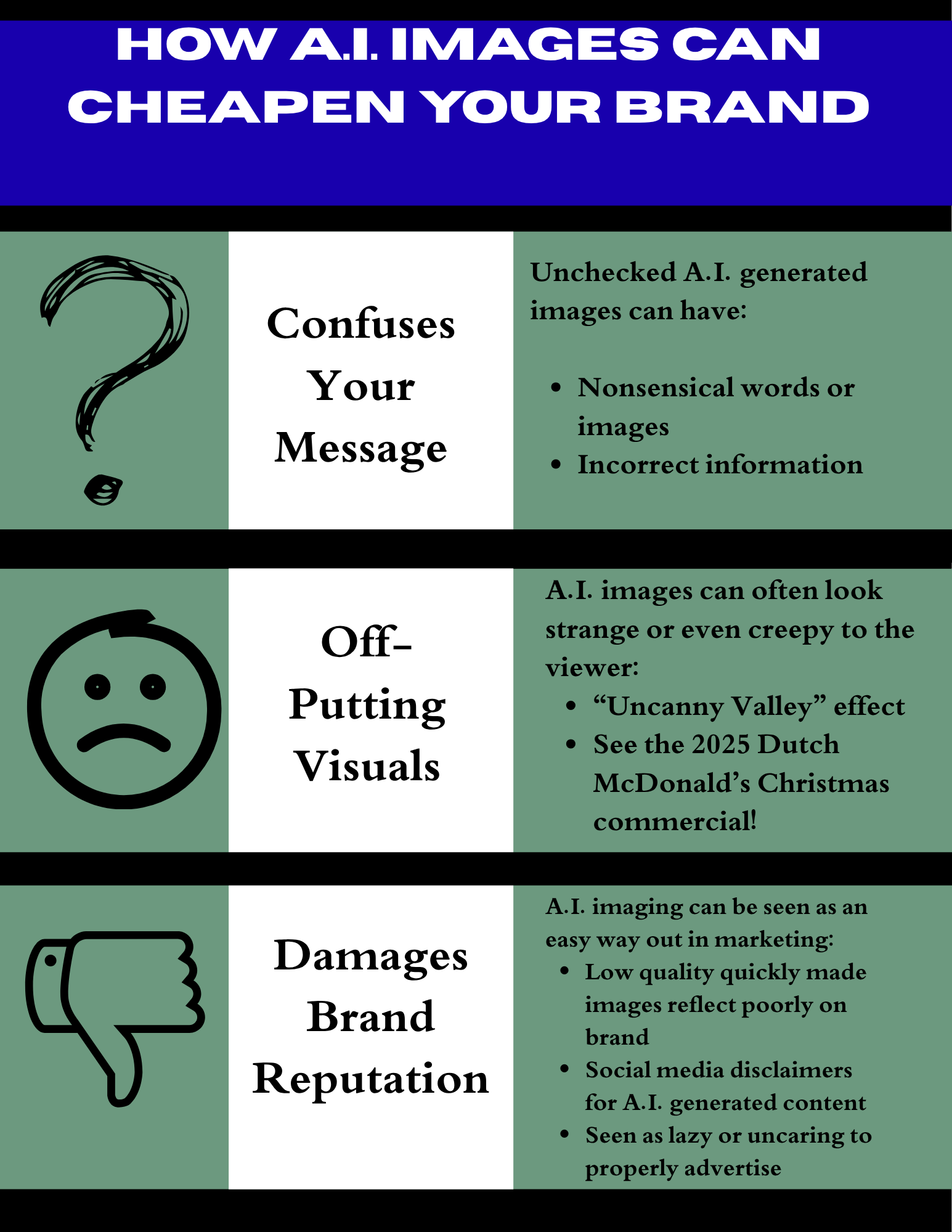
The infographic below displays some of the risks associated with using A.I. generated images in your marketing as you evaluate how to effectively use these tools.